9

Engaging HCP Communities

Mobile-first medical education for community-based health workers to improve early identification of CVDs

“It was great to see such strong results coming from a clear set of objectives, and really strong engagement resulting in actual, measurable improvement in clinical practice across multiple territories, ultimately benefiting patient outcomes”

\- Judges' comments

Gold

25.png

We reached 148,840 community-based healthcare professionals in hard-to-reach, low-resource areas of India, Pakistan, Cambodia, Bolivia and Mongolia with mobile-first, locally relevant education.

24.png

Of the physicians and community health workers who engaged with the online case-based education, 89% said that they had applied learning to their clinical practice.

website-thumbnails-and-icons.png

We focus on impact, and MedShr's pre- and post-education polls showed a 24% increase in correct diagnosis and management. Over 78% of HCPs surveyed also reported improved clinical knowledge.

Educational Objectives

Engage community-based HCPs to improve early diagnosis of cardiovascular diseases

80% of deaths from cardiovascular disease occur in low-and middle-income countries. Early identification and community-based management can substantially reduce premature mortality, however few mechanisms for peer-to-peer learning and ongoing medical education are available to the HCP communities who need it most.

In this global medical education program, our aim was to reach and engage community-based health workers with accessible, mobile-first, case-based learning.

Square images for case examples (1)

Our Approach

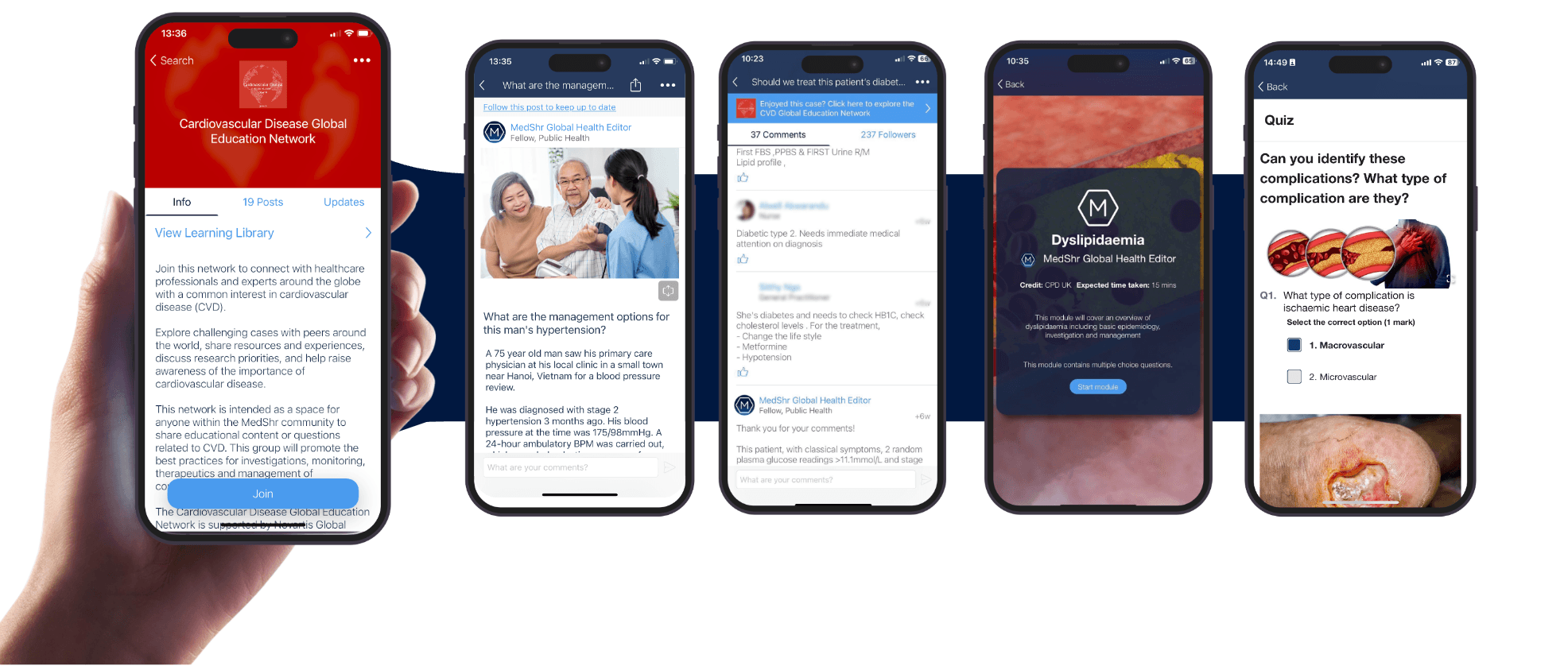
MedShr combined e-learning modules with clinical scenarios and dedicated discussion groups to help health professionals put knowledge into practice:

  • Mobile-first, online discussion groups for HCPs
  • Educational cases combined with e-learning modules
  • Content adhering to local guidelines, accessible in regional languages
  • Integrated polls to engage HCPs in critical thinking

Recognizing the importance of context and cultural relevance, we partnered with local experts to ensure our content was not just broadly applicable but specifically tailored to local challenges. This strategy resulted in content that not only followed local guidelines but also resonated deeply with healthcare workers in LMICs, increasing its uptake and effectiveness.

Our program leveraged MedShr’s low-bandwidth app, ensuring maximum accessibility for HCPs and CHWs in LMICs. This innovative mobile platform delivered crucial education and fostered discussions in a familiar, social-media-like environment, while still maintaining the professionalism and privacy necessary for such communities.

We further innovated by connecting practical, real-world clinical cases to more in-depth learning modules. This approach facilitated experiential learning, allowing participants to directly see the application of theoretical knowledge in patient care and fostering behavioral changes towards best practices.

Lastly, our campaign was unique in its use of data-driven insights. Through integrated polls and analytics, we were not only able to measure the effectiveness of our educational content but also gather vital insights on improvements in competency and confidence among HCPs. This allowed us to inform and refine future program development, ensuring continuous alignment with the needs of our audience.

Screenshot 2024 02 12 at 15.58.04

Target Audience

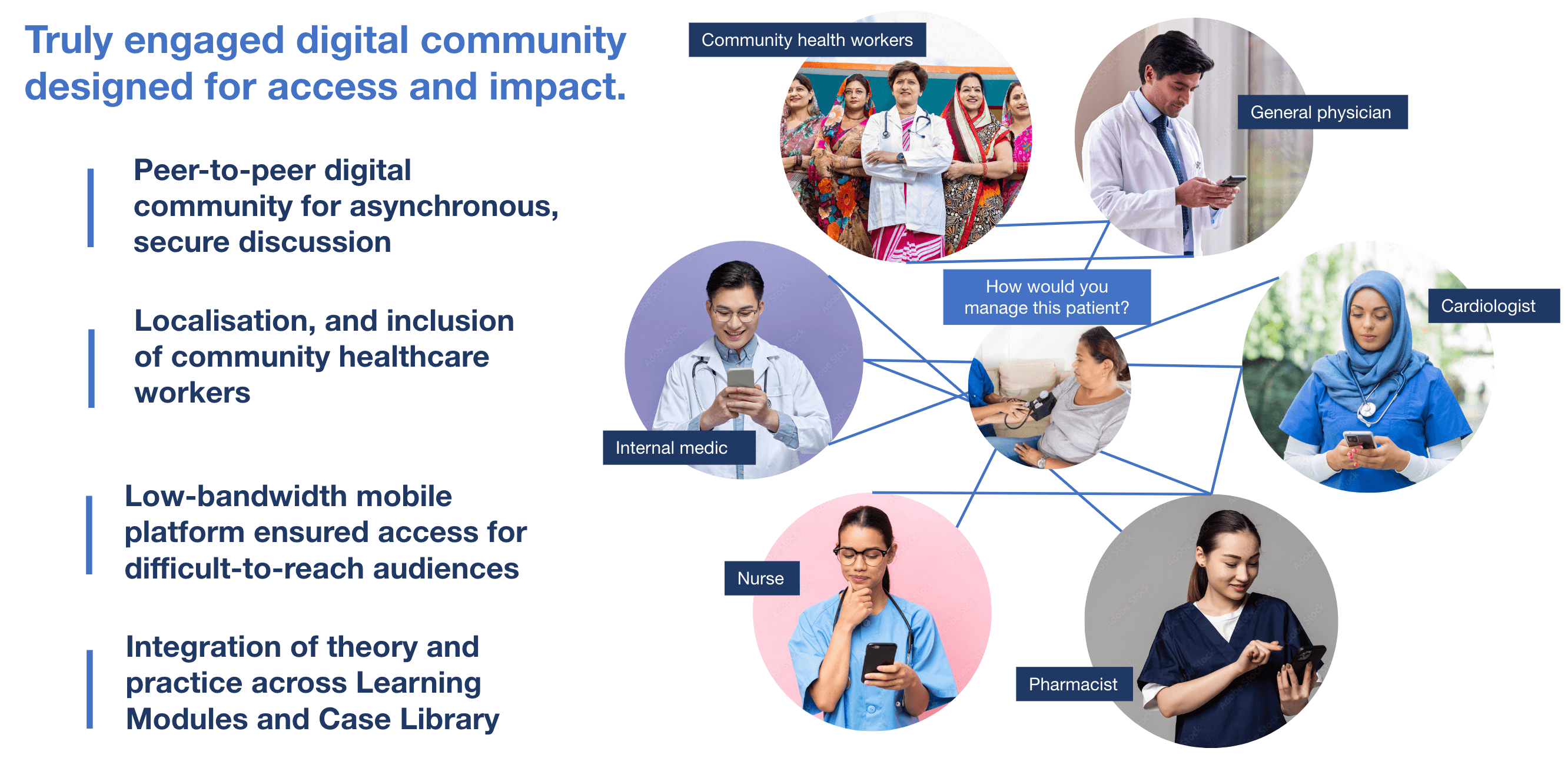
A core focus of this medical education program was to improve community-based management, so we invited community health workers as well as doctors, nurses and other healthcare professionals to take part:

  • Family physicians and specialists
  • Community health workers and nurses
  • Sub-Saharan Africa, LATAM, South Asia
Screenshot 2024 03 04 at 15.00.37

Peer-to-Peer Digital Community

Our innovative approach harnessed the power of a digital community on the MedShr platform, fostering peer-to-peer learning and encouraging critical thinking. This community offered a unique environment where professionals could exchange ideas, discuss clinical cases, and provide feedback, thereby contributing to a more solid and enduring impact of the education.

MedShr's medical education programs are tailored, localized, and targeted

Medical Education Case Studies

1 2

Neuromuscular: Society Partnership

MedShr partners with hundreds of national and specialist medical societies to jointly deliver the highest caliber of medical education. To reduce time to diagnosis and accelerate early specialist referral for Duchenne Muscular Dystrophy (DMD), we partnered with the Muscular Dystrophy Association, enabling healthcare professionals from around the world to learn directly from subject matter experts.

7 Jun 29 2023 08 29 17 5469 AM

Pancreatic Cancer: Insights from KOLs

In pancreatic cancer and other rapidly evolving therapy areas, doctors are faced with an overwhelming amount of data. In this program, we connected oncologists, radiologists and hospitalists in a secure online forum on MedShr to reflect the cases they see in clinical practice. We then invited KOLs to share their insights about the implications of new data on diagnosis and management of patients.

5 2

Rare Disease:Forum for Doctors

With rare diseases, medical education is critical to accelerating diagnosis and referral, and improving patient outcomes. In this case-based medical education program, pediatricians, nephrologists, endocrinologists and family doctors came together in a digital case discussion forum to share their approaches to challenges in early detection of X-linked hypophosphatemia (XLH).

MedShr's medical education programs deliver impact.

What would we recommend for your therapy area?

4 1